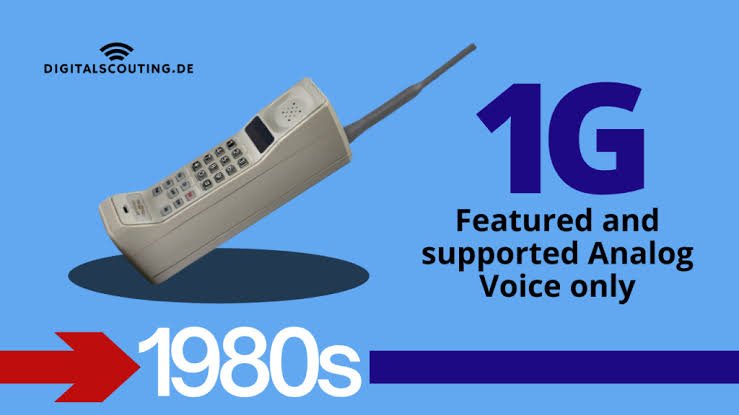
In the 1980s, consumers gained the ability to roam beyond the Radio Frequency (RF) range of their cordless and mobile radio telephones. The first generation (1G) of cellular connectivity featured analog technology standards to transmit data between devices and a cell-based network of towers. The distinguishing feature of the first cellular devices — mostly large and unwieldy “bricks� that did little other than make and receive telephone calls — was their ability to connect with one of multiple towers across a broad network, switching connections between them as users moved out of the range of one and into the range of another.
One such standard is Nordic Mobile Telephone (NMT), used in Nordic countries, Switzerland, the Netherlands, Eastern Europe and Russia. Others include Advanced Mobile Phone System (AMPS) used in North America and Australia,[1] TACS (Total Access Communications System) in the United Kingdom, C-450 in West Germany, Portugal and South Africa, Radiocom 2000 in France, TMA in Spain, and RTMI in Italy. In Japan there were multiple systems. Three standards, TZ-801, TZ-802, and TZ-803 were developed by NTT (Nippon Telegraph and Telephone Corporation[2]), while a competing system operated by Daini Denden Planning, Inc. (DDI)[2] used the Japan Total Access Communications System (JTACS) standard.
The antecedent to 1G technology is the mobile radio telephone.
 5gnetwork